
Meet Sammy: Clinical Project Manager at Qureight
As part of our “Meet the Builders” series, we spoke with Sammy about her path into clinical operations, the realities of running complex trials, and why adaptability matters when working at the intersection of technology and medicine.
What did you do before joining Qureight?
My academic background is in neuroscience. I studied Psychology with Cognitive Neuroscience at the University of Essex before completing a Master’s degree in Neuropsychology and Cognitive Neuroscience.
After university I joined an imaging CRO where I worked across several roles. I started in image analysis before moving into operational positions as Project Start-Up Manager and later Project Manager. I then moved to a large global CRO as a Site Activation Manager, working on both regional and global studies.
Before joining Qureight, I completed my AMP Project Management Qualification and a number of leadership courses, and travelled for mission work visiting hospitals, schools and orphanages.
What attracted you to a career in clinical operations?
I enjoy working with people, managing projects and solving problems, so clinical operations felt like a natural fit.
There is also a personal element to my drive to pursue a career in clinical operations. I’ve known individuals living with rare medical conditions, which sparked an early curiosity about both the science behind those diseases and what happens to people living with them.
That made me think more about how research translates into treatments. Clinical trials are such an important part of that journey, and being able to combine scientific curiosity with operational work is something I find really rewarding.
What separates a well-run trial from one that only looks good on paper?
The team makes a huge difference. When people work well together and there is mutual respect, everything tends to run more smoothly. Even the best systems rely on strong collaboration.
I also think it’s important when expertise is matched with empathy. You want people who are highly knowledgeable in their field, but who also genuinely care about the people whose lives might be affected by the outcome of the trial.
What motivated you to join Qureight?
Qureight has a lot of potential to improve clinical trials, but more importantly it has a clear vision– to accelerate the time to impact of new life-saving therapies in lung and heart diseases.
We spend a lot of time at work, so the environment matters. From the interview process, I could tell that Qureight has the type of culture I want to be part of – somewhere collaborative and supportive.
What surprised you about working inside a techbio company?
I had worked in a similar environment before, so some aspects felt familiar. What surprised me most was how advanced the imaging models are and the pace at which things are progressing. Qureight’s technology is developing rapidly, particularly around imaging and data.
What does a typical day look like for a Clinical Project Manager at Qureight?
A typical day involves working across different teams to make sure deadlines of deliverables are being met. That includes client calls, coordinating study documentation and working closely with colleagues to keep projects moving forward. Communication is a big part of the role, especially when you’re working with sponsors, sites and internal teams.
Process improvement is also important — making sure we continually refine how we work in order to maintain the highest standards.
How do you ensure imaging and data processes meet regulatory standards?
Quality and regulatory requirements are built directly into our processes, particularly through our SOPs and work instructions. These are not added at the end of the process but rather embedded from the start. Everything we do is aligned with Good Clinical Practice (GCP) standards.
How closely do you work with the engineering and data teams?
Very closely, particularly around the design and function of our imaging platform.
We collaborate to make sure sites are meeting the requirements needed to prepare and upload imaging data correctly. At the same time, we want sponsors and sites to have a clear and straightforward experience when interacting with the platform. That means thinking about usability as well as process.
What excites you about how clinical trials might look in the next few years?
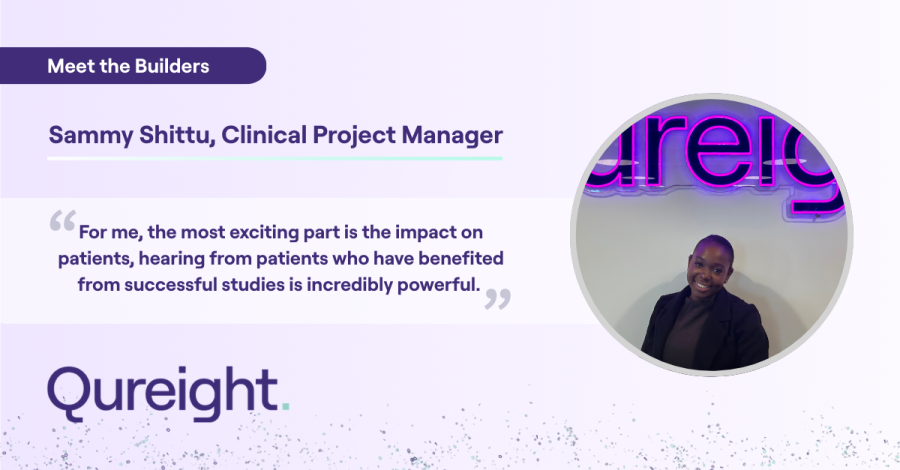
For me, the most exciting part is the impact on patients. You often hear about trials for therapies that don’t reach the market, but hearing from patients who have benefited from successful studies is incredibly powerful. I once spoke with a patient who had taken part in a trial that lasted more than three years and hearing the joy from their family following the success of that trial really stays with you.
I’m also excited by how quickly technology is advancing. When you look at how much progress has been made in AI imaging biomarkers over the last eight years, it’s encouraging to think about what the next few years could bring.
What advice would you give someone thinking about joining the Clinical Operations team at Qureight?
Be open-minded and ready to share your knowledge, but also willing to learn from others. Our team works well because people bring different experiences and perspectives together to find the best solutions. Collaboration is key to our success.
What mindset is needed to work at the intersection of AI and clinical trials?
I think an adaptive mindset is important. You need to be proactive, but also willing to adjust when things change. Sometimes there can be moments of uncertainty, especially when working with new technologies or evolving processes.
If you view those moments as opportunities to learn and grow rather than labelling them as setbacks, it makes a big difference. Continuous learning is immensely valuable in this field.