

“Qureight is uniquely positioned to help biopharma unlock deeper insight from complex clinical and imaging data. By combining our real-world datasets with advanced deep learning, our synthetic control arms and exploratory partnerships enable sponsors to design smarter trials, understand drug effects at a biological level, and accelerate confident development decisions.”
Dr Muhunthan Thillai
CEO and Co-Founder
We use our data assets and in-house expertise to offer the following data science products:

Synthetic control arms
Qureight’s integration of quantitative imaging with real-world clinical data reduces reliance on conventional control recruitment. We enable sponsors to move beyond retrospective comparison and toward biologically grounded external controls that are statistically defensible and operationally scalable. This approach decreases patient exposure to placebo, accelerates development timelines, and mitigates late-stage decision risk by strengthening comparative context before pivotal investment decisions are made.

Exploratory partnerships
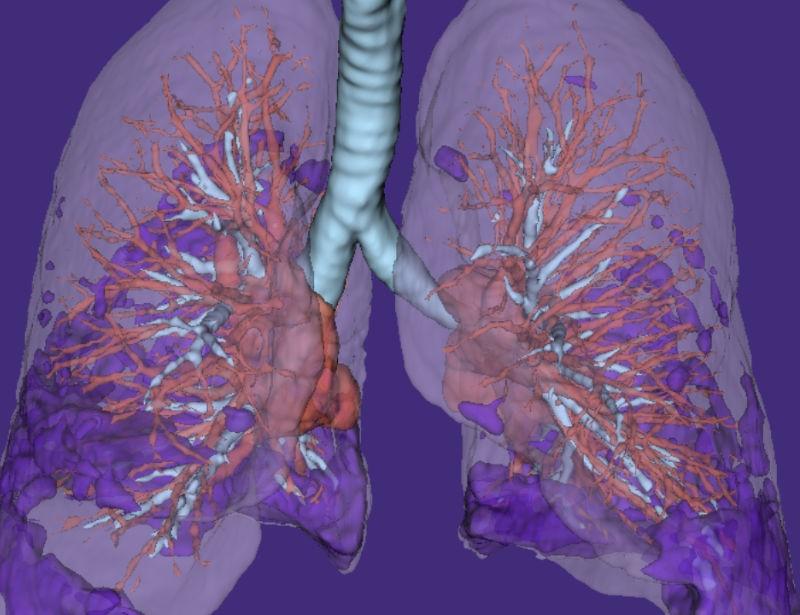
Qureight has commercial access to some of the largest real-world data sets in a range of therapeutic areas. We combine HRCT, clinical variables, demographics and multi-omics to help biopharma address specific challenges, including in early drug development, trial design and toxicity analysis. Application of our deep learning imaging models allows for a greater understanding of drug mechanism in patients by analysis of individual lung compartments to look for drug effect.

Cohort enrichment
Qureight’s AI-powered HRCT quantitative imaging tools enable sponsors to precisely identify and enrol patients with specific disease characteristics, such as fibrosis progression, providing cohort enrichment. By replacing subjective assessments with objective, data-driven insights, sponsors can focus recruitment on patients most likely to respond or progress, sharpening effect size measures and improving trial efficiency and outcomes. This targeted approach minimises delays, lowers costs, and increases the likelihood of demonstrating treatment efficacy.

Enrolled cohort reporting
Qureight’s AI-powered imaging biomarkers deliver real-time, quantitative reporting on the radiological disease severity of enrolled cohorts. These are benchmarked against external reference populations, such as placebo arms, standard-of-care datasets, or earlier-phase study participants. This enables sponsors to validate cohort quality, identify outliers, and make data-driven adjustments early in the trial, ensuring alignment with study goals. By providing actionable insights for course correction, we help sponsors mitigate risk, optimise trial design, and confidently demonstrate treatment effects.
-

Creation of synthetic control arms with a biotech partner
-
Analysis of imaging data with a biopharma partner